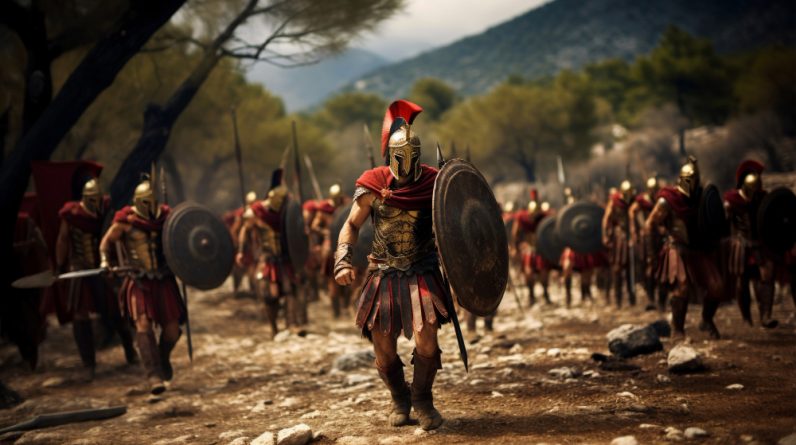
Alexander the Great’s military education and background were influenced by both formal training and personal experiences. He was born into a royal family, the son of King Philip II of Macedon, and from an early age, he was immersed in military life.
- Early Exposure to Military Life: As a young prince, Alexander accompanied his father on military campaigns and observed military strategies firsthand. This early exposure helped shape his understanding of warfare.
- Tutoring by Aristotle: Between the ages of 13 and 16, Alexander was tutored by the philosopher Aristotle. While Aristotle’s teachings were more focused on philosophy, science, and politics, they also influenced Alexander’s strategic thinking and leadership style. Aristotle’s lessons in science and literature helped Alexander in understanding different cultures and managing a vast empire.
- Military Training: Under the guidance of his father, Alexander underwent extensive military training. His father, King Philip II, was known for reforming the Macedonian army and transforming it into a powerful military force. Alexander learned about the use of the phalanx formation, cavalry tactics, siege warfare, and military leadership. He also likely gained hands-on experience in battle during his youth.
- Leadership Experience: At the age of 18, Alexander was left in charge of Macedon as regent while his father was away on a campaign. During this time, he successfully led a military campaign against rebellious tribes and founded the city of Alexandropolis. This early leadership experience further honed his military skills.
- Influence of King Philip II’s Reforms: Philip II’s military reforms were crucial to Alexander’s education. The formation of the Macedonian phalanx and the use of combined arms tactics (integrating infantry, cavalry, and siege warfare) formed the foundation of Alexander’s military strategies. Alexander inherited and built upon these reforms during his conquests.
In summary, Alexander’s military education was a combination of royal upbringing, exposure to battlefield tactics, formal tutoring, and personal experience. This background laid the groundwork for his success as one of history’s greatest military leaders.
Certainly! Continuing from where we left off:
- Practical Experience in Battle: As Alexander grew older, he gained significant practical experience in military operations. His first real battle experience came when he was just 18 years old at the Battle of Chaeronea (338 BCE), where he fought alongside his father against the Greek city-states. Alexander’s bravery and tactical skill during this battle helped solidify his reputation as a capable leader. He played a key role in securing the Macedonian victory, leading the cavalry with great success.
- Influence of Cultural and Strategic Exposure: During his military campaigns, Alexander not only applied the skills he learned from his education and early experiences but also absorbed strategies from various cultures he encountered. His campaigns took him across the Persian Empire, Egypt, India, and beyond. Alexander’s ability to learn from his adversaries and adapt their military techniques was a key part of his success. For example, he encountered different types of warfare, from Persian cavalry to Indian elephants, and used those experiences to adjust his tactics as needed.
- Innovative Tactics and Leadership: Alexander’s education in military strategy was marked by his ability to innovate on the battlefield. His use of the Macedonian phalanx was highly effective, but he also recognized the importance of flexibility. One of his most notable strategies was his effective use of cavalry in battle, particularly the Companion Cavalry, which was critical in many of his decisive victories, such as at the Battle of Gaugamela. His ability to read the battlefield, adapt his plans, and exploit weaknesses in the enemy made him an exceptional commander.
- Psychological Warfare and Motivation: Alexander’s military education also included lessons in motivating his men. He understood the importance of inspiring loyalty and courage among his soldiers, many of whom were far from home and faced long, difficult campaigns. His leadership was often marked by his personal involvement in the frontlines, sharing the risks of battle with his troops, which endeared him to them. Additionally, Alexander was known for using psychological tactics, such as the terror of his swift victories and his ability to demoralize enemies through calculated displays of power and strategy.
- Legacy of Military Education: Alexander’s military education had a lasting impact not just on his own empire but on future generations of military leaders. His conquests and the strategies he employed were studied and admired by later military figures, from the Roman generals to Napoleon Bonaparte. The discipline, tactics, and adaptability that defined Alexander’s military education continue to be celebrated in military academies worldwide.
In conclusion, Alexander the Great’s military education was multifaceted, incorporating both formal instruction and extensive field experience. His success as a conqueror can be attributed to his deep understanding of military tactics, strategic vision, and ability to adapt and innovate in the face of new challenges. His education, shaped by his father’s reforms, his tutor Aristotle, and his own leadership experience, allowed him to become one of history’s most brilliant and influential military commanders.